What is the best month to take a Danube River cruise?
Month-by-month guidance for picking the right time for a Budapest Danube river cruise, from winter heated cabins to summer evening departures.
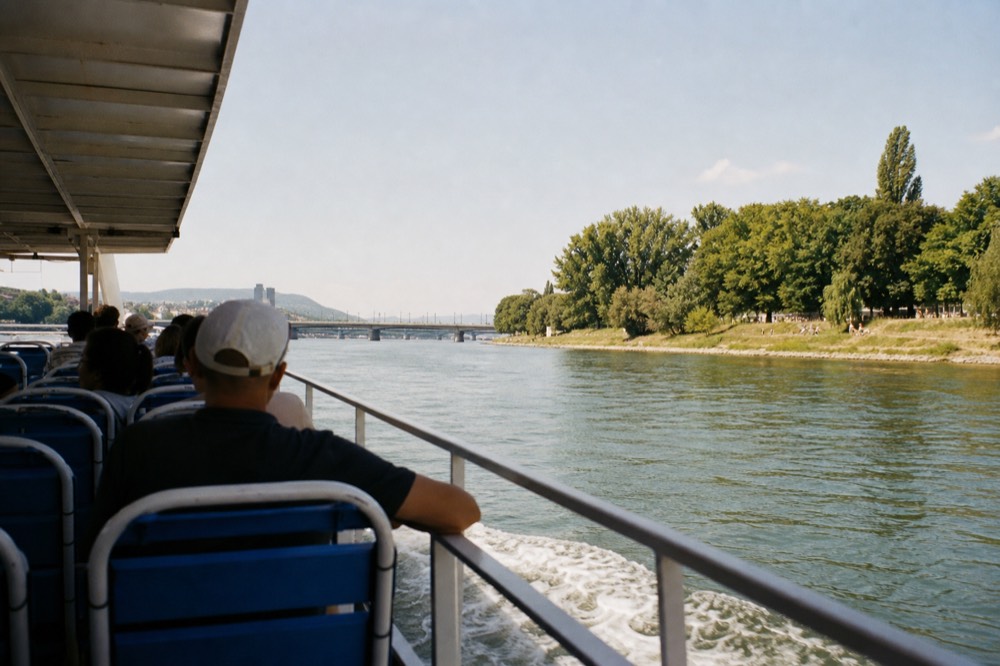
Budapest's Danube sightseeing cruises run year-round. That single operational fact, confirmed by every major local operator, changes the whole "when should I go" question: you are not choosing between a cruise season and an off-season, you are choosing between light, weather, crowds, and what kind of evening you want. Boats here have heated indoor cabin areas for winter departures, and the Danube in Budapest rarely freezes solid enough to halt cruise operations, so the river stays open in January just as it does in July.
The trade-offs are real, though. A summer departure gives you long twilight and warm open decks. A December departure gives you the Parliament building lit against a dark sky at 4:30 in the afternoon, and a cabin to retreat into afterward. This guide, put together by the team behind Budapest River Cruises, walks through the months, the light, and the practical details, so you can match the calendar to the cruise you actually want rather than defaulting to whatever month your flight happened to land in.
What is the best month to take a Danube River cruise?
There is no closed season, so the best month depends on what you want: late spring through early autumn for open decks and long golden evenings, December for the illuminations against early darkness and heated cabins, and weekday mornings in any month if you want the fewest fellow passengers on the rail. The boats themselves barely change. Legenda runs its glass-enclosed panoramic boats from Dock 7 on Jane Haining rakpart in every month, and Duna Cruises keeps its paddle steamers and modern Citadella boat moving from Dock 10 on the same embankment. What changes is the light on the water, the temperature on the deck, and how many other people want the same hour you do.
If your trip is fixed to the classic warm months, aim for the shoulder edges rather than the peak. May and September tend to give you the best combination: warm enough that the open deck is comfortable for a full hour, but past the point where every departure sells out weeks ahead. The unlimited-drinks departures, like the spritz cruise that starts at $29 and runs 75 minutes (checked September 2026), are especially sensitive to this. Warm-evening departures fill first, and the operator flags them as likely to sell out.
The one thing worth locking in early, in any month, is timing relative to darkness. Evening and night departures are scheduled to show the illuminated Parliament building, Buda Castle, and the bridges after dark, and the window between sunset and full dark is when demand concentrates. Daytime departures, commonly running hourly through the afternoon, show the same riverfront landmarks in natural light and are usually the easier ticket. A morning sailing in October can feel almost private, while the same route at 9pm on a July Saturday is a full boat with a queue at the gangway. Neither is the wrong choice, but they are different products wearing the same name. For more on how the timings work, see our guide to how long a Budapest river cruise lasts.
Is winter too cold for a river cruise in Budapest?
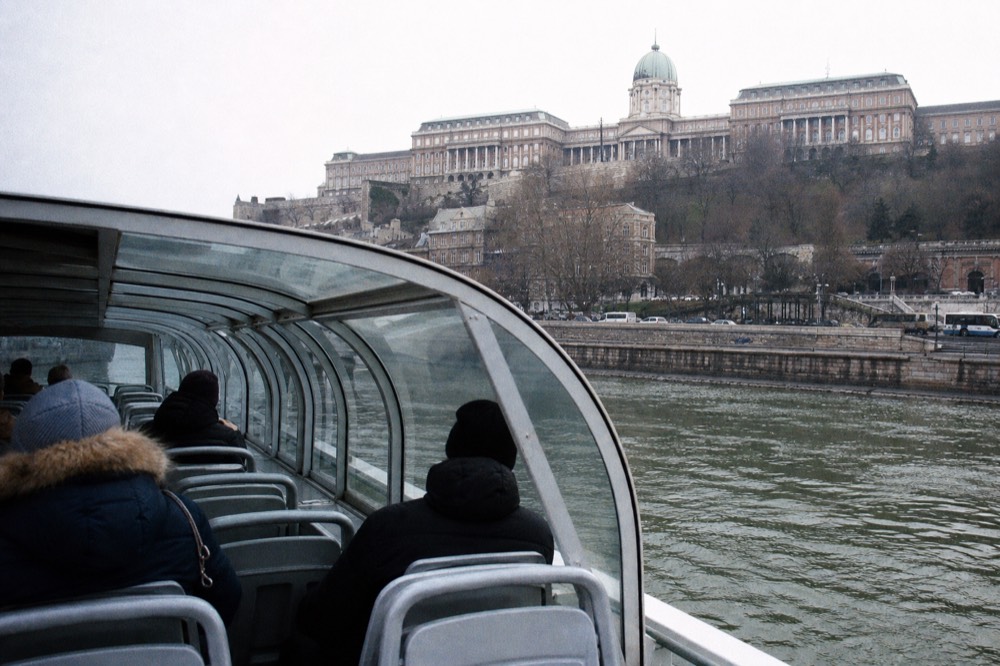
No. Winter cruises run on a normal schedule, the boats have heated indoor cabin areas, and the Danube in Budapest rarely freezes solid enough to halt operations, so a January cruise is a perfectly ordinary thing to book, and in some ways a better one than a July sailing. The experience is different, not diminished. You watch the Chain Bridge and the Citadella on Gellért Hill slide past from inside a warm glass cabin, and you step onto the open deck in short bursts for photos rather than camping there for the whole sailing. Operators here are built for it: Legenda's boats are glass-enclosed panoramas precisely because the season never stops, and the recorded audio guides, available in around 30 languages, keep running through the cold months exactly as they do in summer.
The winter advantage is darkness. Budapest sits far enough north that by late December the sky is dark well before many people have finished work, which means even an early-evening departure gets you the full illuminated riverfront. The Parliament building, designed by Imre Steindl in Gothic Revival style and built between 1885 and 1904, is lit at night by an extensive illumination system, and against a 4:30pm night sky it is the single most photographed view on the river. A summer cruiser has to wait until 9pm for the same scene, and pays peak-season crowds for the privilege.
The practical winter notes are simple. Dress in layers, because the cabin-to-deck temperature swing is the whole game. Arrive 15 to 20 minutes before departure, since boats leave on a fixed schedule and check-in takes a few minutes regardless of the season. And if a cold snap has been severe, check the operator's live listing the day before; ice rarely stops the boats, but it has happened historically on the Danube, and operators communicate schedule changes through their listings rather than through guesswork. One more winter tip: the drink included with a Legenda ticket tastes considerably better when you are holding it inside a heated cabin watching snow land on the deck outside. Winter cruises are a genuinely atmospheric product, not a consolation prize for people who could not travel in July.
When do the night illuminations make the biggest difference?
The illuminations matter most from late autumn through early spring, when darkness falls early enough that even a 5pm or 6pm departure gets the fully lit riverfront, while in midsummer you need a departure after roughly 9pm to see the same scene. This is the single most underused piece of timing advice on the Budapest cruise scene. People book a "night cruise" in June for 7pm and sail in full daylight, then wonder why the Parliament looks flat in their photos. The lights are the same in every month. The question is whether your departure time intersects with actual darkness.
The landmarks you are waiting to see lit are worth knowing by name. The Buda Castle Quarter and the Danube banks together were inscribed as a UNESCO World Heritage Site in 1987, extended in 2002 to include Andrássy Avenue. The Fisherman's Bastion, the Neo-Romanesque terrace designed by Frigyes Schulek between 1895 and 1902, glows above the water on the Buda side, its seven towers representing the seven Magyar tribes that settled the Carpathian Basin. The Liberty Bridge, opened October 4, 1896 as the Franz Joseph Bridge and painted its bottle-green color, lights up in a way that photographs better from the water than from either bank.
A shorter lit landmark deserves a pause here. The Shoes on the Danube Bank, created by film director Can Togay and sculptor Gyula Pauer and installed on April 16, 2005, commemorates the mostly Jewish victims shot into the river by Arrow Cross militiamen in 1944-45. Cruises pass it on the Pest embankment. It is a quiet sixty pairs of cast-iron period shoes, and many skippers slow the boat. If you want to understand the riverfront rather than just photograph it, this is the stop that does it, and it reads the same in every month of the year.
How do crowds and prices change across the season?
Demand peaks in the summer tourist months and around the late-December holiday period, while weekday mornings in the colder months are the quietest sailings, and cruise ticket prices at the operators tend to hold steadier than hotel prices, so the biggest seasonal saving is in availability rather than headline price. The best-selling departures are flagged as likely to sell out on their listings, and that flag appears most in summer evenings and the December window. The dinner cruise that starts at $58, with a 4.7 rating across 7,557 reviews (checked September 2026), carries a "likely to sell out" note on its listing for exactly this reason.
Here is how the year tends to break down as a planning range. Treat it as a pattern, not a promise, and always check the operator's live listing for the specific date.
| Period | What the river is like | Best departure type | Watch out for |
|---|---|---|---|
| December to February | Early darkness, heated cabins, occasional ice risk on rare cold snaps | Early-evening sightseeing or dinner cruise | Dark by mid-afternoon; book heated-cabin boats, check listings in deep cold |
| March to April | Warming decks, fewer crowds, changeable weather | Late-afternoon cruise, stay flexible | Rain and wind can close open decks without notice |
| May to June | Long twilights, warm decks, peak light for photography | Sunset departure, booked well ahead | Top sellers start filling weeks out |
| July to August | Hottest decks, biggest crowds, latest darkness | Night departure after roughly 9pm for lights | A 7pm "night" cruise may still sail in daylight |
| September to October | Warm days, earlier darkness each week, thinner crowds | Early-evening cruise, best light-to-crowd ratio | Darkness arrives earlier week by week, recheck times |
One structural note on the pricing side: several of the strongest Budapest cruise products keep their firm prices on the listing rather than in a static price sheet, so the honest way to compare is to open the live listings for your dates. The sightseeing cruise from $22 and the spritz cruise from $29 (checked September 2026) are the two clearest anchor points for a budget, and the dinner cruises sit above them. Our Budapest river cruise tickets and prices guide breaks down what each ticket class typically includes, and it is worth a read before you commit to a specific departure, because the difference between a basic sightseeing ticket and a dinner sailing is not just money, it is the shape of your whole evening.
What about the Danube Bend and day trips by season?
Day cruises out of the city, like the Danube Bend trips, are effectively a warm-season product, so if your heart is set on sailing past Visegrád rather than past the Parliament, plan for late spring through early autumn. Mahart PassNave, Hungary's largest passenger shipping company, established in 1994 as the continuation of the state MAHART line, runs its Budapest sightseeing cruises and Danube Bend day trips from Dock 5 at Vigadó tér, plus departures on the Buda side at Batthyány tér. The Bend is a full-day commitment, and the river landscape there, gorges and hills rather than city fronts, is a different product from the 75-minute city loop.
For the city itself, the sightseeing cruise above is the year-round workhorse: roughly an hour on the water, from $22, with 632 reviews on the operator's live listing (checked September 2026). It is the cruise most worth booking in the shoulder months when you want the landmarks without the crowd, and the one to book on a weekday morning in winter if you want a nearly empty deck. If you are weighing whether the shorter city cruise or a full dinner sailing suits your trip better, our piece on whether a Budapest river cruise is worth it goes through the trade-offs honestly, including what you give up by choosing the cheapest ticket on the board.
Does the river ever freeze or stop cruises?
Almost never in practice. The Danube in Budapest rarely freezes solid enough to halt cruise operations, and heated modern boats keep sailing through winter, so the honest answer is that the season runs 12 months and a cancellation would be an exceptional event communicated through the operator's listing. This is worth stating plainly because a surprising number of travelers assume a northern capital's river shuts down in January. It does not, and it has not for a long time. The boats are built for the climate, the operators schedule through the winter, and the heated indoor cabins are the standard configuration rather than a special provision.
The historical context makes this more interesting. The river has frozen hard in past centuries, and the city's relationship with its river has changed enormously since Buda, Pest, and Óbuda were unified into a single city, Budapest, on November 17, 1873, with the unified city council taking over administration. Ten bridges now cross the Danube within Budapest, eight carrying vehicle traffic and two carrying railways, and every one of them is part of the lit panorama a night cruise sells you. The Chain Bridge, the first permanent bridge across the Danube in Budapest, opened on November 20, 1849, designed by English engineer William Tierney Clark and built under the local supervision of Scottish engineer Adam Clark, initiated by Count István Széchenyi. Sailing under a bridge that has carried traffic since the middle of the 19th century, in a heated boat, in January, is one of those small historical vertigos that river cruises do better than almost any other kind of tour.
The spritz cruise above, 75 minutes from $29 with a 4.6 rating across 3,705 reviews (checked September 2026), is the classic warm-evening product, and it is the one where the calendar genuinely matters: an open-deck drinks cruise in July is a different experience from the same boat in a February drizzle, even with the cabin as a fallback. If unlimited drinks on the water is the version of Budapest you came for, aim your trip at the months when the deck is the main event, and our unlimited prosecco cruise guide covers the format, the crowd and the pitfalls in full.
One last practical point that applies to every month: boarding. Operators advise passengers to arrive 15 to 20 minutes before departure for check-in, because boats leave on a fixed schedule. The numbered docks along Jane Haining rakpart on the Pest embankment, including docks 6, 7, 10, and 11 used by operators like Legenda and Duna Cruises, are close together but not identical, so confirm your dock number when you book. Getting the wrong dock by three numbers is the most common self-inflicted miss on the Budapest cruise scene, in every season, and it is entirely avoidable with thirty seconds of attention at booking time.
A note on winter conditions themselves: Budapest's coldest month is January, when average temperatures sit around 29 to 30 degrees Fahrenheit, roughly minus 1 to minus 2 Celsius. Days are short, with sunrise near 7:30 a.m. and sunset around 4 p.m., which works in your favor on a night cruise, since the city lights are on well before the earliest evening departures. Snowfall is possible but the river itself stays open for traffic in all but the most extreme years.
If you want the best odds of calm water and warm evenings, aim for late spring through early autumn. May through September brings the most reliable deck weather, while December adds a seasonal draw of its own: the Christmas markets and the Advent lights along both embankments, which many cruises route past. Whatever month you choose, book the heated-cabin boats for winter departures and the open-deck products for summer, and the river will do the rest.
Common questions about the best time of year for a river cruise in Budapest
The short version: Budapest cruise boats run every month of the year, the best month for lit landmarks and warm cabins is December, the best month for open decks and long evenings is late spring through early autumn, and the quietest sailings are weekday mornings in the colder months. The questions below cover the specifics.
What is the best month to take a Danube River cruise?
There is no closed season, so the best month depends on what you want: late spring through early autumn for open decks and long evenings, December for early darkness and the fully lit riverfront from a heated cabin, and weekday mornings in any month for the fewest fellow passengers. The boats run year-round with heated indoor cabins.
Is winter too cold for a Budapest river cruise?
No. Winter cruises run on a normal schedule, boats have heated indoor cabin areas, and the Danube in Budapest rarely freezes solid enough to halt operations. Dress in layers, plan short bursts on the open deck for photos, and arrive 15 to 20 minutes before departure as usual.
When do the night illuminations make the biggest difference?
From late autumn through early spring, when darkness falls early enough that even a 5pm or 6pm departure gets the lit Parliament, Buda Castle, and bridges. In midsummer you generally need a departure after roughly 9pm to see the full illuminated riverfront.
Does the Danube ever freeze and stop cruises?
Almost never in practice. The river in Budapest rarely freezes solid enough to halt cruise operations, and heated modern boats keep sailing through winter. In a rare severe cold snap, check the operator's live listing for any schedule change.
Are Budapest river cruises more expensive in summer?
Headline prices tend to hold steadier than hotel prices, so the bigger summer constraint is availability rather than cost. The best-selling departures are flagged as likely to sell out on their listings, most often in summer evenings and the December holiday window. Always check the operator's live listing for your specific date.
Do Danube Bend day cruises run all year?
They are effectively a warm-season product. Mahart PassNave runs its Danube Bend day trips from Dock 5 at Vigadó tér, and the full-day river landscape trips are best planned for late spring through early autumn. The city sightseeing loops, by contrast, run year-round.